
War and Silence
What remains across generations

A conversation with Angledtay Ordsway about her poem 1942 became the quiet beginning of this piece.
These words would not let me rest:
“It may sound strange, but it’s almost comforting to know there are still people out there connected to that time in history. It’s more than just a blip in a history book. It’s real and raw and needs to continue to be talked about.”
The following memoir in prose and poetry was not easy to write. The prose especially asked something difficult of me.
~~~
An unsettling quiet surrounded the war in our home. Our curiosity was met with silence that felt inherited, not chosen. So I learned to let it rest until my grandson, a real history buff, brought his own questions. All I had to offer were a few guessed-at answers. What was not spoken became what must be searched for in boxes of forgotten things.
We spread old photos and envelopes across our laps, trying to piece together what my father kept to himself. Many sparked my grandson’s interest, but nothing excited it like the headline of a small yellowed newspaper clipping:
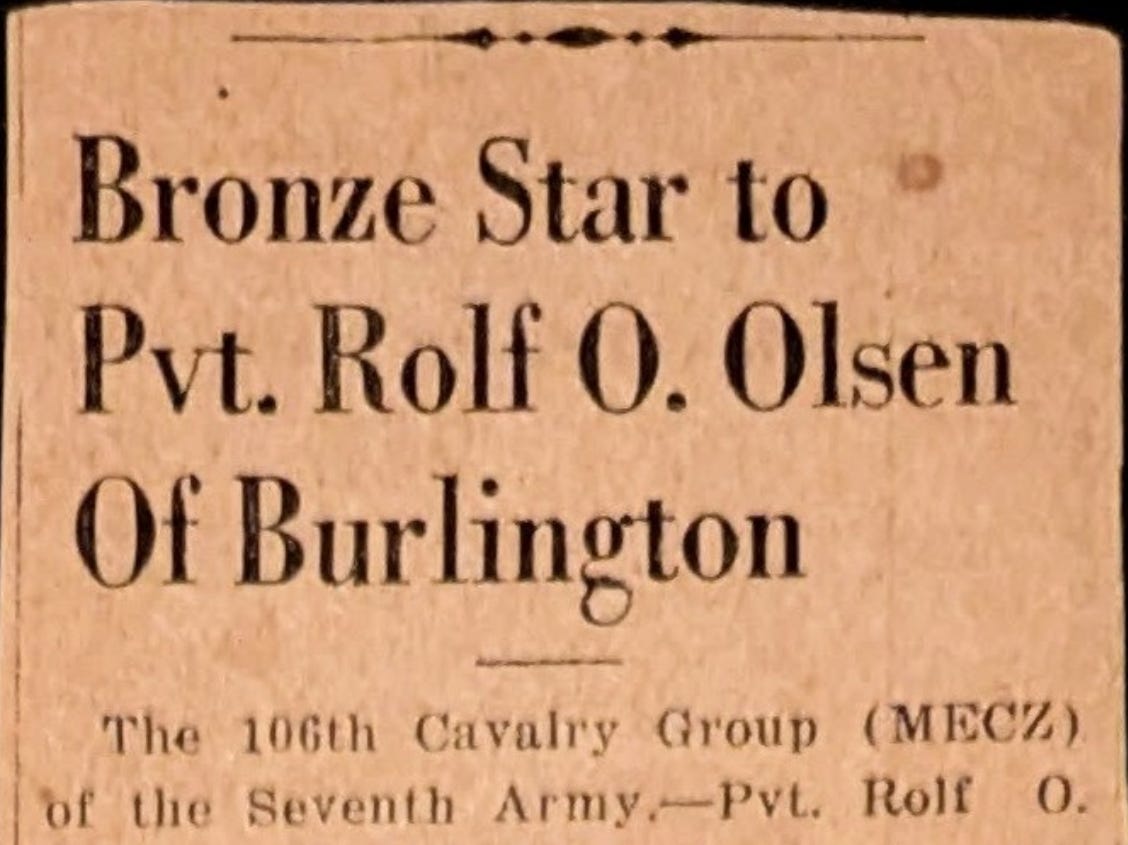
Not only did it rupture the silence, it activated memory.
We read every word and turned back to the photographs again and again, assembling answers as if they had already been waiting for us. Everything arrived in fragments.
Bit by bit, we came to understand that my father served in the 106th Cavalry Group (Mechanized), a reconnaissance unit of the Illinois National Guard that moved through France, Germany, and into Austria in the final phase of the war. The clipping places him in Normandy and with the 7th Army in eastern France, where German defenses gave way.
Before the war he worked at Electric Boat Company in Groton, Connecticut, building submarines. I remember the stories about the noise, the work, the ringing that never stopped.
The clipping records his awards: Bronze Star, Purple Heart, Good Conduct. In the photographs, sharpshooter insignia rests on his uniform.
Because of my grandson’s keen interest, we discovered that the 106th led the XV Corps into Austria, as the first American unit to enter Salzburg and accept its surrender on May 4, 1945.
It was there he met my mother. A war ending and life beginning in the same breath.
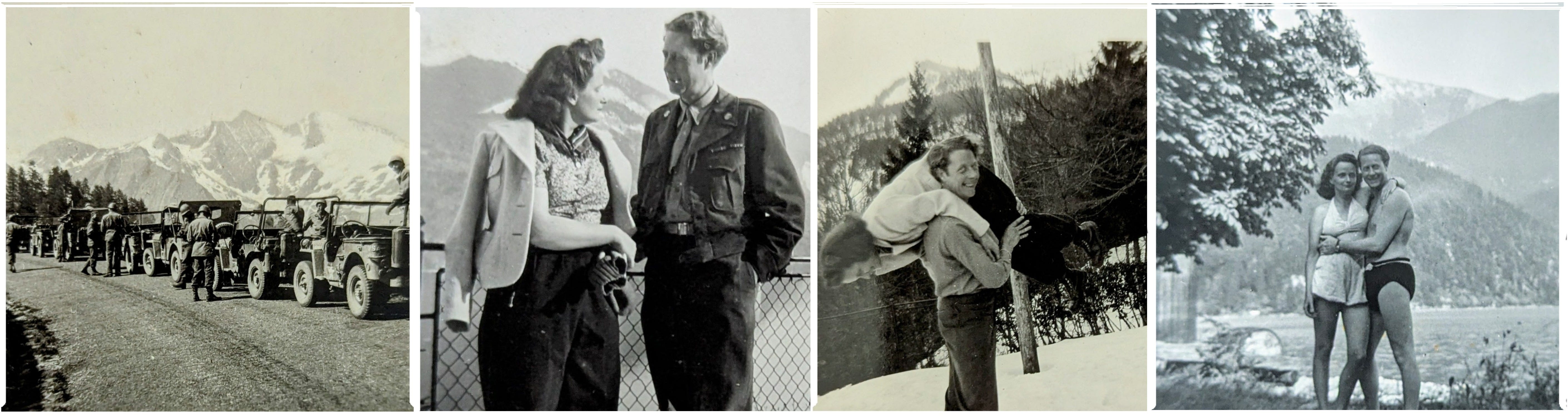
The story of the private man defined by what he did not say widens, bringing clarity.
Europe was still rebuilding itself when my father tried to do the same. In Vienna he studied art while searching for work, digging ditches to make ends meet. No longer a soldier, but carrying the aftereffect in emptied hands and bottles.
With a child on the way, civilian work with the American occupation in Germany eventually drew them away from Vienna, my mother’s heart and home.
The Stars and Stripes newspaper, under U.S. forces, offered steady employment, and Germany became our home while Austria remained our home away from home.
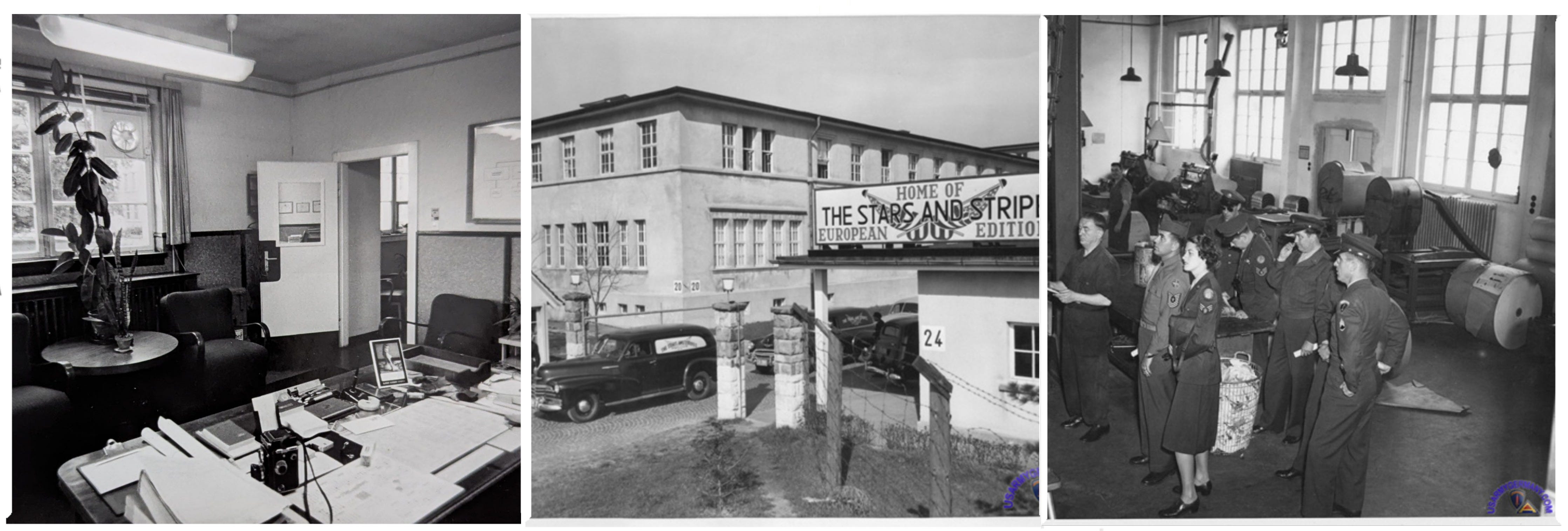
My father didn’t speak of the war, but he spoke. He spoke of my mother and of Austria, her beauty, her art, her music. He spoke three languages fluently and of his roots in Norway. He connected us with his Norwegian friends, relatives, and customs through exchanged letters, photos, recordings, packages, and visits.
There was little my father could not fix or build with his own hands, always clean and manicured at the end of the day. He was more than a soldier. He was a gifted artist and self-taught photographer, capturing our lives in photos and film. He was multi-abled, quiet, capable, withheld.
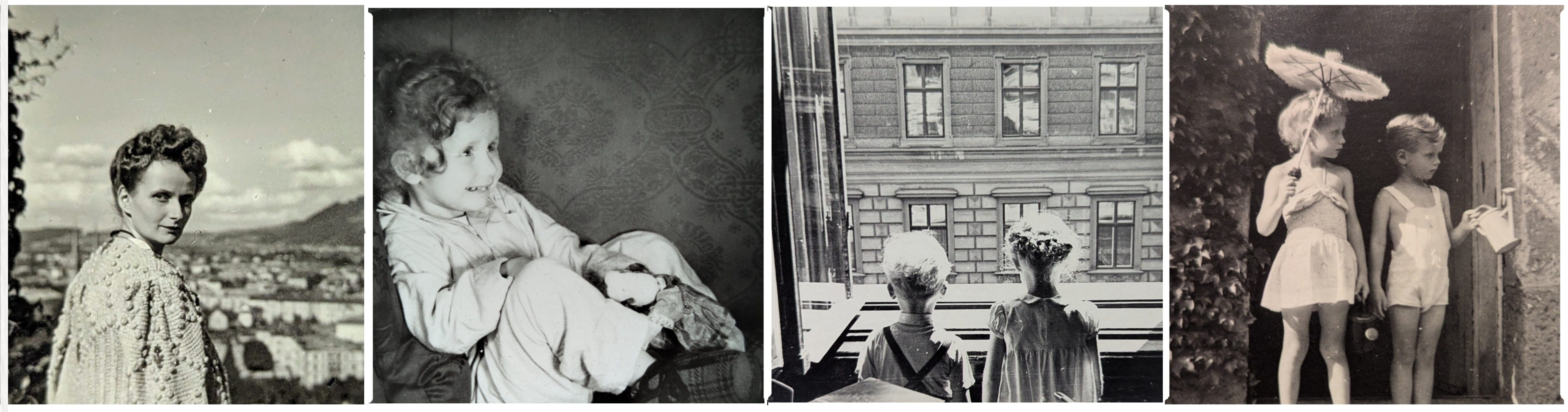
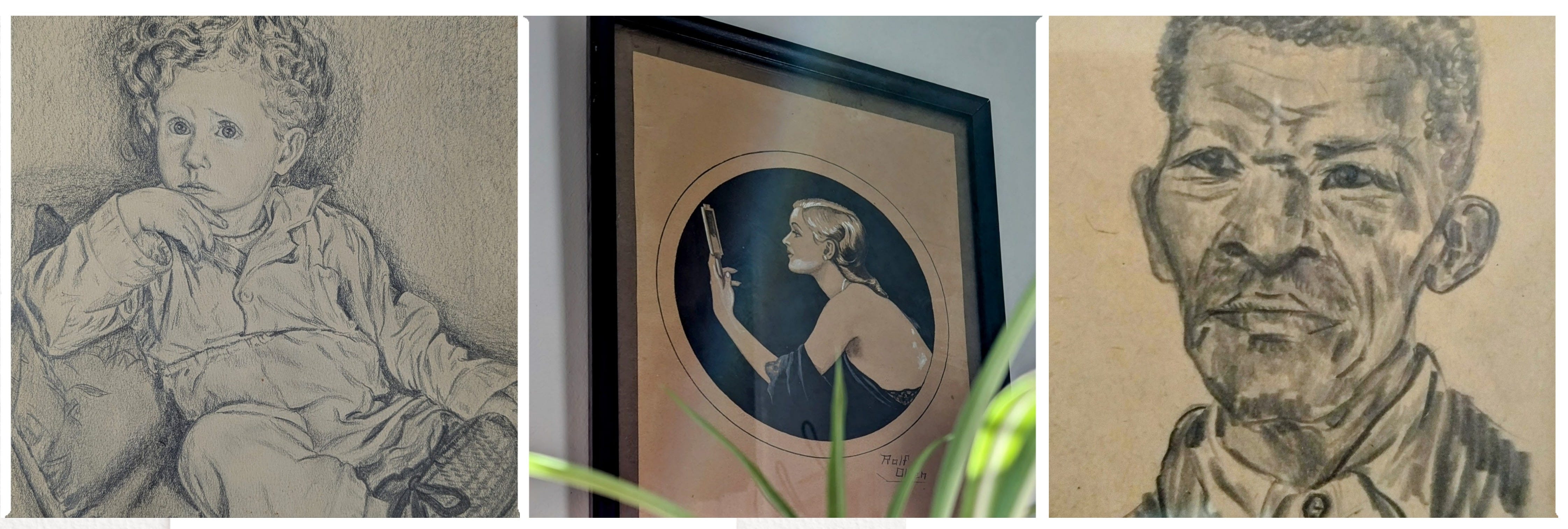
I still have surviving works from his time at the art academy, and many of his photographs, home movies, and items from Norway and Austria. His silence about the war feels quietly meaningful because everything else about him remains so fully alive.
And now, thanks to my grandson and our search for answers, a single yellowed newspaper clipping reached across generations. It is not the answer to everything withheld, but a cherished continuation.
~~~
grand-heart and I
float in the fold
of a newspaper
clipping
yellowed to bone
“Bronze Star”
a headline still warm
your name
spoken softly
almost near
enough
to feel
to smell
your old spice
~
we read about you
in the fields of France
splitting open
and closing again
swallowing dreams
as if they could forget
The 106th Cavalry
the wind off Normandy
the eastern quiet
trembling but held
breaking the enemy
~
before it all
you bent steel
into submarines
made them breathe
underwater
a ringing
that stayed
long after
~
Bronze Star
Purple Heart
Good Conduct
marksman
metal
that never reached
your mouth
~
from paper
to memory
1945
Austria
a door
already open
war ending
mid-air
without ceremony
you and she meet
a fractured fairytale
among ruins
still smoking
calling it
beginning
~
Vienna
in her school of art
light fell sideways
on your empty hands
already carrying too much
digging a new passage
~
Germany
relearning its shape
olive green moving through it
young
restless
reading
what the world had done
The Stars and Stripes
ink pressed hard enough
to cross an ocean
bottles empty enough
to promise
relief
while you said nothing
of the war
the weight
what stayed
~
only this
paper
thin as breath
refusing to let you go
holding you here
not seeing my tears
or the world you left behind
for me
for your great grand-heart
who would have leaned
into you
without asking
I think
you would have held him
very close
If these words touched you, I would love it if you considered buying me chocolate. :)

How absolutely beautiful, a respectful, tender offering of love through the fragments that convey your wonder and pride in being the daughter of this resourceful, gifted and deep feeling man who was so silent about the war and would, undoubtedly hold your grand heart, grand son close.
This is really lovely (interesting too), and the same kind of research I’m doing with my own family right now :-)
I like how you’ve used silence and fragments – that feels right.